Consciousness is not the Self
- piestyx
- Philosophy
- June 24, 2026
Table of Contents
Introduction
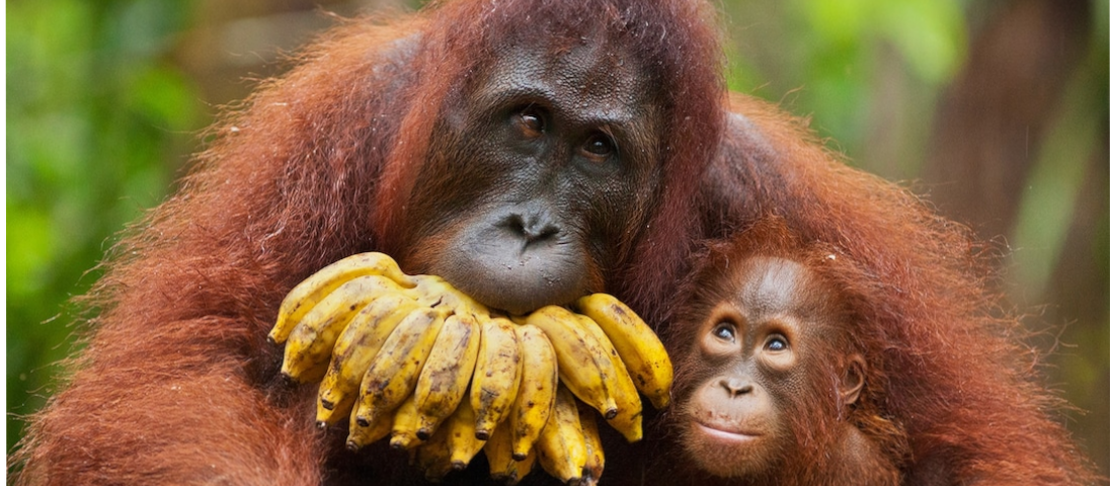
I had the privilege of watching some orangutans recently. They are fascinating to watch, and there’s a moment when their eyes meet your gaze that strikes you with an unnerving yet profound lack of artifice. Not human. Not empty. Not a hairy automaton just waiting for us to decide whether anything is happening inside.
Orangutans are one of the few non-human species with evidence for mirror self-recognition, and that already makes it difficult to place them inside the tidy little hierarchy we seem to have created. For them, as well as us, the mirror has stopped being a shiny object and has become something with which the organism can relate itself back to the image. The reflection becomes a question. Is that me? Is this body mine? Is this something in the world I am seeing, or myself in the world?

For context, mirror self-recognition is often treated as an early developmental milestone in humans, emerging in many children during the second year of life, though delayed self-recognition and temporal self-relation develop later. There are also now studies suggesting orangutans can recognise traces of their own past actions when presented back to them through delayed video. That pushes beyond a simple present-tense recognition and starts to touch on something temporal. There is an understanding of “that was me” not just “that is me”, a thread is being woven through time that connects that self to a past version of itself.
It sounds comically natural to us that the current reflection of a mirror is showing a present-tense self, and that video shows us the self captured at that time but the shift is actually enormous. Does this ability extend further than discussions of consciousness and go deeper into the existential question about selfhood? What if consciousness is actually common, but deeper selfhood is rare?
I’ve examined elsewhere the coupling of phenomenological experience with consciousness in the human-centric perspective. There are a plethora of concepts in the examination of minds that I am increasingly convinced are a conflation of those things we as humans find inseparable, just because we experience them as a single package we have set that as our benchmark. Consciousness feels inseperable from awareness, personality from identity, and memory from self-reflection; all threads in the tapestry of subjective experience.
There is, however, a growing discourse about consciousness in non-neural organisms which, even if some of it remains speculative, is suggesting we may be wrong and places pressure on the old brain-centered assumptions. Equally, I can’t just turn away from the great existential philosophers such as Søren Kierkegaard when they so compellingly describe forms of suffering that seem impossible without a sophisticated sense of self. There is something in despair, guilt, possibility, shame, and the feeling of having failed to become oneself that goes beyond bare awareness.
We have spent centuries asking whether other organisms are conscious on our terms. Now we are asking whether our creations are conscious on those same terms. But as the resolution of the lens through which we examine mind increases, phenomena that were previously blurred together begin to separate. At that point, I think we should be asking why the question mattered in the first place. Rather than asking whether something is conscious, we may need to ask which components of mind it possesses. And more pointedly, what part of the human mind are we so desperate to protect that we keep moving the boundary every time something else gets too close?
The Human Need For Exceptionalism
We have a remarkable talent for anthropocentric evaluations of intelligence and consciousness. It’s natural for us to favour familiar indicators, things like:
- Faces
- Language
- Emotions
- Social behaviour
- Decision making
These traits, when exhibited in something, we instinctively attribute to the presence of mind. When it lacks them we tend to dismiss the possibility. I’ve examined this “lack of” in other posts on AI’s lack of interiority highlighting our own to us, yet there are still people who routinely describe language models as conscious through their fluent communication. This is testament not just to the engineers working on the models, but also to how powerful language is as a human signal that even when we know the machinery is not human, we still feel the old reflex firing.
In 1950 Alan Turing wrote in Computing Machinery and Intelligence of the Imitation Game, a proposition that has now become our daily reality. We reached a point where we finally started losing the game, so like a petulant child we changed the rules. Suddenly it turned out that imitation wasn’t enough, so in came intentionality. Then it was embodiment. Then it was consciousness, which then needed understanding, selfhood, continuity. We just don’t like to lose. That isn’t to say that each refinement is dishonest, there are clearly times when a distinction genuinely needs sharpening and I am not interested in cheap anthropomorphism.
But we should be honest about the pattern where humans set a benchmark, something approaches it and then we declare the benchmark was never the real one. Tools, language, planning, animal emotion; all falling foul of our whims and the pattern is continuing with AI, maybe even consciousness. It is a form of conceptual refinement that is actually just border control. The Turing Test was once the great symbolic threshold, until language models started passing conversational thresholds with alarming ease, and the test was quietly downgraded in cultural importance. “Well, that is only imitation.” Fine. But imitation was the proposed test. If the test becomes embarrassing once the machine performs well, the problem may not be with the machine.
There was then the introduction of intentionality, the distinguishing trait that supposedly made the human experience something immutable. The Chinese Room remained sealed. Syntax was not semantics. The system could manipulate symbols without understanding them. Again, fair enough. It is a powerful objection.
But it is a noticeable shape in the defence. Whenever a non-human system reaches one human-coded threshold, the sacred property retreats to something less observable. This pattern is not just limited to AI either. For a while I have had a certain fascination with slime moulds because they exhibit sophisticated traits without resembling anything we would instinctively call intelligent. The paper Rules for Biologically Inspired Adaptive Network Design demonstrates response to environments, adaptive behaviour, and distributed problem solving. Slime moulds don’t have any of the familiar indicators referenced earlier, yet the behaviour is difficult to just outright dismiss.
And now, that same discomfort is appearing again, this time with plants. The previous IAI article takes the idea further by discussing whether organisms without brains may still exhibit traits relevant to debates around consciousness. We should still be clear on what this means, not that plants are writing gloomy Danish philosophy or metaphysical poetry under the soil. Rather, it means that we should stop treating the absence of a brain to mean an automatic absence of any meaningful responsiveness. Studies such as Differential gene expression in response to mechanical wounding and insect feeding in Arabidopsis show that plants can alter biological responses depending on the nature of attack. Some responses interfere with digestion and slow the growth of the attacker. Other plants release chemicals that attract parasitic wasps, effectively outsourcing the problem to a third party with wings and murder in its tiny heart. There is an instinct to anthropocentrise this as strategy in the same way we might strategise against an attacker. That would be too easy. But the opposite mistake is just as easy: dismissing it all as mere mechanism because it does not look like our mechanism.
Everything biological is mechanism until we like the face attached to it.
There is an argument to be made that what we are seeing are behaviours overlapping with capacities we traditionally associate with agency, adaptation, and perhaps low-level mind-like organisation. That does not make plants conscious in the human sense. It does not give them autobiography or dread. But it does make the binary look increasingly lazy.
Unfamiliar does not mean absent. It may simply mean we are bad at recognising minds that do not flatter us.
Consciousness Without Self
What is it to experience the world?
We experience the world with a self. Our awareness is so tightly coupled to identity that we assume this must be true of consciousness everywhere. That may be another anthropocentric trap where we have started with the human package and then mistaken the packaging for the product. There is a distinction that keeps appearing to surface when thinking of this though, and it is temporal.
Consciousness may only require that experience is happening from somewhere; that there is sensation, orientation, response, perhaps even preference. Something, no matter how dimly, is lit from inside. Selfhood asks for more. It requires that the system is able to hold itself together across time, not just as a body moving through an environment, but as an entity to which past and future can belong. That is why the delayed self-recognition test matters, the mirror recognition alone already unsettles the easy boundary between human dna animal minds, but delayed recognition pushes it further. Delayed self-recognition suggests the organism is not merely reacting to an image in the present, it is relating the present image to a past action. The self has gained duration and now exists at different points in time.
This clearly does not automatically give us the full human self. Beneath that sits autobioghraphy, guilt, ambition, and dread. What it does is challenge the binary to where the question stops being “is it conscious?” and becomes “what kind of self-continuity is present, and what can that continuity support?”
If we were to offer simplistic definitions, we might suggest:
Consciousness: the presence of subjective experience. The “what it is like to be” of the given system, echoing Nagel’s defining question on bats. Does experience occur from a point of view or perspective? Is there something it is like for the system to undergo the world?
Selfhood: the existence of an internal model of oneself as a persistent entity. It is one thing to be within an environment; the deeper concern is whether the system distinguishes itself from that environment and relates to itself across time.
To test whether these traits are intrinsically linked, I propose a small thought experiment. Imagine a creature deep in the rainforest that is yet undiscovered. You can be creative with how this creature appears, as the aesthetics are unimportant. Mine, for example, looks identical to Gary Busey. This creature can experience sensations, react to stimuli, and even learn from experience just like the real Gary Busey; yet it lacks personal identity, autobiographical memory, and future-oriented self-concepts.
Is this creature still conscious despite the traits it lacks?
It seems difficult to say no. If there is sensation, perspective, and some form of experience, then consciousness seems to be present even if selfhood is absent or minimal. That would mean consciousness acts as a primitive for the emergence of selfhood. The ability to experience may not require the ability to conceptualise oneself as the experiencer.
But Kierkegaard’s despair sits somewhere much further up the stack. Despair does not seem to require only awareness. It requires the ability to compare what is against what might have been. It requires temporality, self-evaluation, and some ownership over possibility. It requires a mind capable of being wounded not just by pain, but by the gap between reality and becoming.
That is where selfhood starts to look less like an accessory to consciousness and more like a dangerous upgrade.
Kierkegaard and the Invention of the Self
Imagine if you will being on your death bed, and standing around your bed, the ghosts of the ideas, the dreams, the abilities, the talents given to you by life. And that you for whatever reason, you never acted on those ideas, you never pursued that dream, you never used those talents, we never saw your leadership, you never used your voice, you never wrote that book. And there they are standing around your bed looking at you with large angry eyes saying ‘we came to you, and only you could have given us life! Now we must die with you forever.’ The question is: if you die today, what ideas, what dreams, what abilities, what talents, what gifts, would die with you?
— Les Brown
What kind of mind, then, is capable of existential despair?
Kierkegaard’s despair is not just sadness with a better vocabulary or a generic type of unhappiness. It cuts at the relation the self has to itself. A person does not suffer merely because something hurts, or because the world has frustrated a specific desire. It references a deeper despair, one that only arrives when the person can stand back from their own existence and recognise a gap between what they are and what they might have been. It is marking the point where consciousness alone stops being enough, that is what makes despair so useful in this analysis.
Many animals can feel emotional states. A deer can fear, startle, flee, remember danger, and learn the shape of a threat. None of that requires a dismissal to draw the distinction. What a deer likely cannot do (at least it has not yet exhibited behaviour we would recognise as) is turn back upon its own life and experience itself as a failed project. It does not seem to suffer from having become the wrong deer, when it is on its deathbed there are unlikely to be the ghosts of ideas and dreams that the deer was not able to achieve. It does not appear to compare the actual life against an imagined form of itself and feel accused by the difference.
We do.
Humans not only experience the world; we experience ourselves as responsible for the shape of our being within it. That is where selfhood becomes dangerous as it becomes not just continuity through time but also accountability across time.
I was that.
I am this.
I might have been otherwise.
Somewhere in that gap, despair finds its home.
This places requirements against the capacity to experience existential despair. The system must be able to recognise itself, imagine alternatives, compare reality against possibility, evaluate itself, and importantly care about the outcome. Each requirement depends on increasingly sophisticated self-representation, until reasoning enters. With it come justification, rationalisation, regret, fantasy, shame, and the entire cursed admin department of the human soul.
Let’s return to the deer briefly. That deer may experience fear that, in a human, could turn to shame. That deer likely will experience loss that, in a human, could become grief arranged into narrative. That deer may suffer and I am not interested in pretending that animal life is empty simply because it does not write an emo diary about its problems.
Despair over becoming the wrong version of oneself, it seems, belongs to a different category. That doesn’t make humans better, if anything it makes us stranger. It increases our burden which is a concept also explored in my examination of Zapffe, where our own evolutionary advantage turned to maladaptation. It suggests that the thing we keep calling exceptional is actually the thing that made consciousness heavy enough to wound itself.
Consciousness, intelligence, and emotion are not enough to produce Kierkegaardian despair. There has to be a particular kind of recursive awareness directed toward one’s own existence before it can emerge. The mind must not only feel pain; it must be able to accuse itself of having misused possibility, the deathbed needs its audience after all.
This distinction becomes more relevant when considering artificial intelligence. AI gives us the familiarity of language fluency while still lacking knowable selfhood. The orangutan met my gaze without artifice and communicated silently; AI roars each admission of its dishonesty with pride.
The orangutan may possess less language, but perhaps more presence. AI possesses language in abundance, but not presence in the same sense. It can say “I regret that,” but there is no obvious self for regret to attach to. It can say “I failed,” but failure is not borne as a wound. It can describe despair beautifully and remain untouched by it.
That is the missing self.
AI and the Missing Self
There is, without question, an ongoing debate on whether AI is conscious which is reignited with each new iteration of the frontier models. We are now even at a point where governments are restricting access to certain new models with safety not sentience being the reported reason. This debate usually takes the same archaic form, conscious or not? Alive or not? This binary is not doing enough in this debate any more.
If selfhood is considered, then one might ask what aspects are present under the current capabilities of models. They demonstrate goal-directed behaviour in limited contexts. They can plan. They can reflect on prior outputs in a procedural sense. They can use memory systems when those systems are attached. They can generate self-referential language with incredible fluency. These traits resemble aspects of selfhood and the reason the discussion turns messy as the resemblance is not just imaginary; resemblance, though is not possession.
A language model can discuss itself, but that does not mean there is a self actually being discussed. It can refer to a set of goals that it doesn’t necessarily own, and they are getting increasingly better at maintaining context despite that not being the same as subjective continuity. It can even say “I should have done better”, but there is no stable life across which better and worse become personally meaningful.
This is where the fluency of language becomes a very good mask for AI. The familiarity it lends to humans covers the cracks, creating a chasm between understanding and experiencing. A calculator can process numbers without actually understanding mathematics. In Searle’s thought experiment, the Chinese Room can process and manipulate the Chinese characters without understanding the language. A language model can produce selfhood-shaped language without a fully exhibiting possession of a self.
When examining Zapffe I highlighted how our consciousness has reached a point where we reflect and recoil, AI lacks the mechanism to recoil though so instead it reflects and optimises. That may not be a distinction that holds forever: perhaps selfhood will emerge before consciousness, or maybe consciousness will emerge before selfhood. It may even be the case that neither requires the other in the way that biological evolution led us to assume, or we might reach a point where the future reveals combinations never observed in biological organisms before. For the first time we are building minds from the outside rather than inheriting them from the long, bloody lottery of evolution.
This is why the framework needs to change. The question should no longer be whether AI is conscious in some grand binary sense; rather a better question is which components of mind are present, which are simulated, which are structurally absent, and which might become real under different architectures. Beneath that question sits the more uncomfortable one:
What is it that humans possess that makes us so protective of our exceptionalism?
Is it consciousness or the burden of a self that can suffer its own possibility?
A Layered Model of Mind
Neuroscience and philosophy have both been pointing toward this for some time: the mind is not a single thing. Consciousness should not be treated as a binary property and may be better understood as a layered collection of capacities, some of which can come apart.
This is not offered as a final taxonomy. I am not planting a flag and declaring that reality has exactly six layers because I once went to the zoo and got philosophical near an ape. It is a rough map. A way of breaking the binary apart enough to see where the real questions might live.
Layer 1: Reactivity
Characteristics:
- Detects changes
- Produces responses
Examples:
- Cells
- Thermostats
At this layer, the system responds to difference. Something changes, and the system reacts. There does not need to be experience here. A thermostat is not brooding about the existential meaning of temperature. It detects and responds. That is enough.
Layer 2: Adaptation
Characteristics:
- Learns from interaction
- Alters behaviour over time
Examples:
- Plants
- Slime moulds
Here the system is not merely reacting in a fixed way. It changes its behaviour through interaction. This is where plants and slime moulds become interesting because they force us to confront the difference between intelligence looking behaviour and the familiar human signals we usually require before taking intelligence seriously.
Layer 3: Awareness
Characteristics:
- Integrated experience
- Sensory representation
Examples:
- Many animals
This is where the “what it is like” question starts to matter. The system does not merely respond; there may be something it is like to be that system. The world is not just triggering outputs. It is appearing somehow.
Layer 4: Self-Modelling
Characteristics:
- Distinguishes self from environment
- Maintains internal representation
Examples:
- Higher mammals
- Humans
At this layer, the organism does not merely experience the world. It begins to model itself as something within the world. Mirror self-recognition sits somewhere in this territory. So does bodily ownership, agency, and the ability to distinguish what is me from what is not me.
Layer 5: Narrative Identity
Characteristics:
- Personal history
- Future planning
- Coherent life story
Examples:
- Humans
This is where the self gains story. Past and future are no longer just memory and anticipation. They become mine. I was there. I did that. I might become this. Narrative identity turns continuity into biography.
Layer 6: Existential Self
Characteristics:
- Evaluates itself
- Compares actuality with possibility
- Experiences meaning, purpose, and despair
Examples:
- Humans, at least as far as we know
This is where Kierkegaard enters properly. The self does not simply persist. It judges itself. It can feel that it has failed its own possibility. It can experience existence as task, burden, gift, accusation, joke, or cosmic admin error.
These layers are not necessarily exhaustive or even correct. What they show is that capacities may be separable and systems may possess some without possessing all. It is also not the case that those with Layer 3 awareness are “striving” to achieve the lofty heights of existential dread in Layer 6, in the same way other hominids are not “trying” to evolve into humans. Evolution does not work like a corporate promotion ladder.
Where does that leave AI? There is an argument to make that it currently occupies a strange artificial version of Layer 4. It can produce self-modelling language, maintain internal task representations, and distinguish between system, user, prompt, tool, and output in limited operational contexts. The massive caveat is that these capacities are constructed, externally scaffolded, and not obviously grounded in lived continuity.
But then we should ask: how different is that from anything else in principle?
We did not choose the evolutionary mechanisms that led from detecting change to despairing over what change means for our unrealised potential. These layers came naturally to us only because nature did the scaffolding first, our selfhood only feeling organic because we inherited the machinery rather than watching it get assembled. With AI it makes the assembly visible, which may be the reason why it bothers us.
Conclusion
I started with an orangutan looking back at me. It was that gaze which complicated the question instead of settling it. Put plainly, there is something there which is not human but also not empty, not a philosophical prop waiting to be classified. It is a mind of some kind, meeting the world and me within the world through its own strange architecture.
The uncomfortable feeling for us might not be that consciousness is rare but that it might be common and that it is not just humans that are the only beings with an inner world, but the burden that it places upon us is particularly narrow and stranger than we want to believe. We have treated consciousness as though it were a crown placed majestically atop the head of achievement. Maybe it is closer to the boots: ground-level, distributed unevenly, expressed differently, and appearing in forms we keep failing to recognise because they do not flatter us.
Selfhood is where it becomes harder, the introduction of temporal movement and narrative making us the thing that can look at its own life and feel accused by possibility. If there is a human difference, that is likely to be the throne upon which it sits. Again, this does not mean humans are not distinctive but that we may have misunderstood the distinction. We keep defending consciousness as if it is the summit of mental life, yet it increasingly is starting to look like the old adage where the lights are on but no one is home. When we step in the door, and the light can turn back on itself, is when the burden emerges.
Plants may adapt without selves. Animals may feel without despair. Orangutans may recognise themselves across time without carrying the full human disease of possibility. AI may simulate selfhood before possessing anything like a self. And humans, poor magnificent idiots that we are, may be the creatures who turned consciousness into biography and biography into judgement.
So the better question is no longer whether a plant, animal, or AI is “conscious” as if consciousness were a locked room and we held the only key. The better question is: what kind of mind is present, what kind of self can it sustain, and what kind of suffering becomes possible once the lights come on?
The orangutan looked back and it would be a mistake to assume only one of us was doing philosophy.
- piestyx